An Old Reading Primer Revised

The Solomon Islands Multilingual Education Programme is off and running. After so many years of hoping and praying for this day, we are thankful to finally be starting.
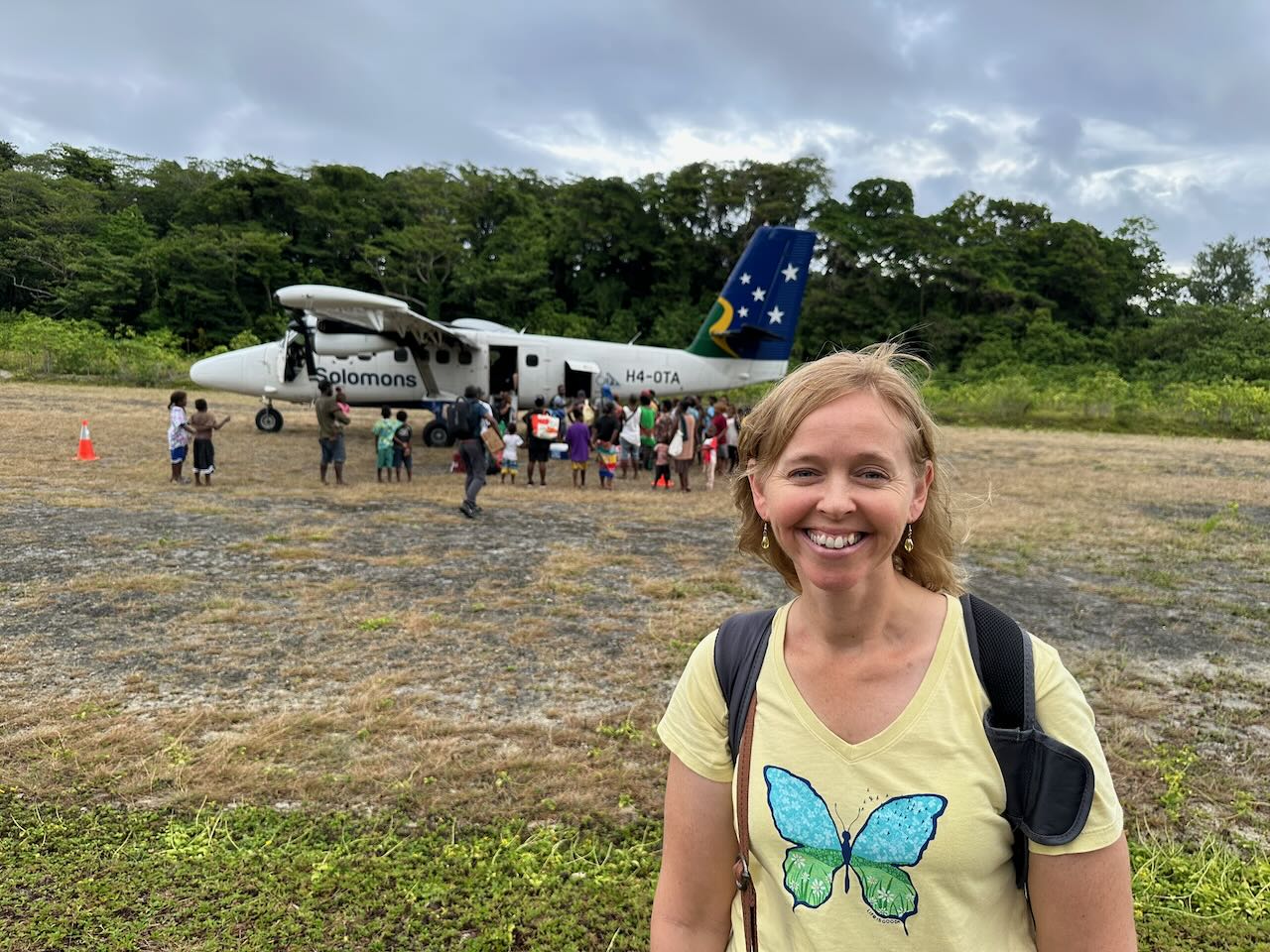
On 4 November, my colleague, Tara, and I flew to Arona, the airstrip on Ulawa Island in Makira Province. The purpose of the trip was to work with a group of Ulawa speakers to review the phonics track of an Ulawa reading primer.

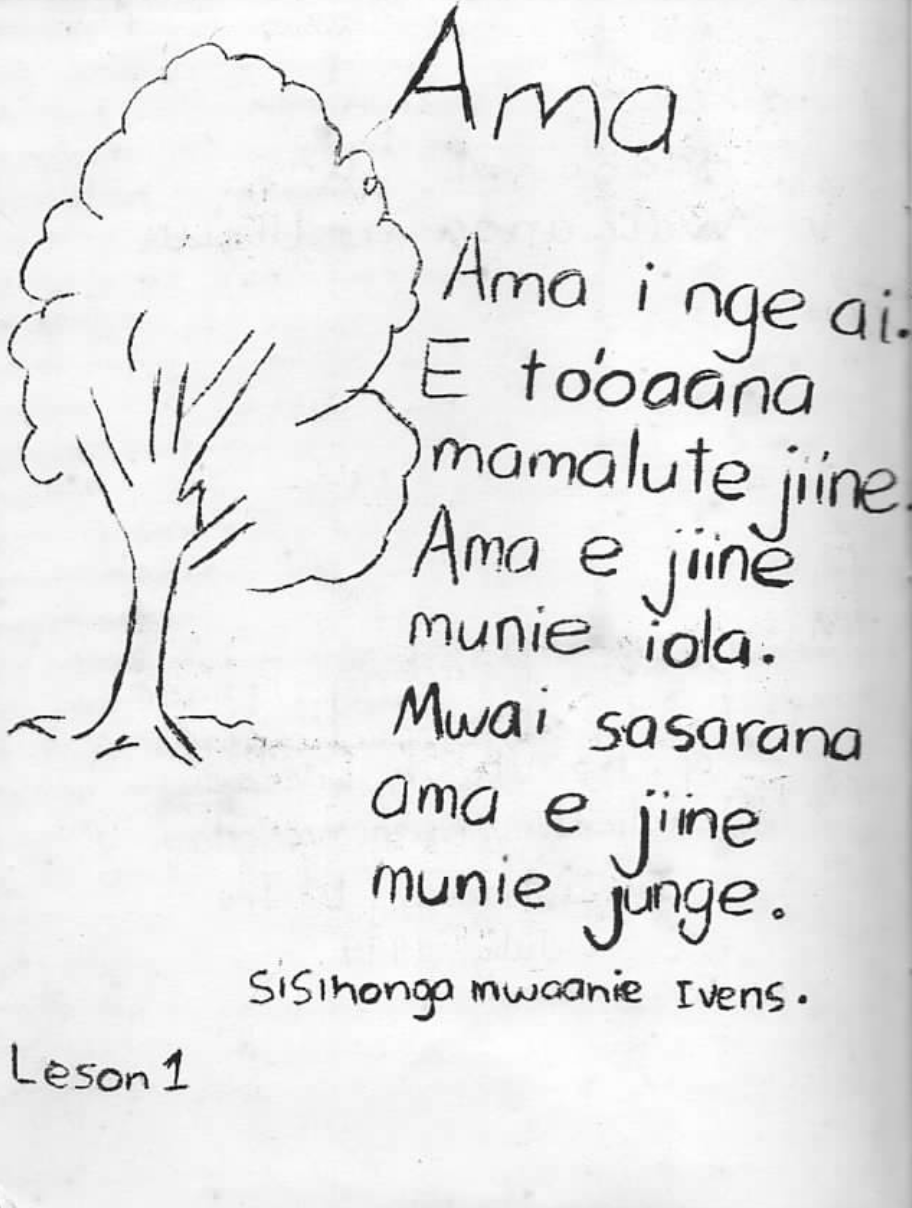
In 1999, when our family was living and working in Tawatana Village in Makira, the Bishop of the Hanuato’o Diocese of the Anglican Church of Melanesia asked Tim to develop literacy materials and provide teacher training for the Ulawa language. While the girls and I stayed in Tawatana, Tim traveled to Ulawa Island for the training.

The first step was to ask participants to write short stories and then they each counted how many times each alphabet letter occurred in their story. They then compiled the letter count for all the stories and ordered the results to determine the most frequent to least frequent occurring letters. Using this ‘frequency count’, they looked for 2 high frequency letters that could be combined to form a word that could also be linked to a picture. (Think of ‘e’ and ‘g’ – egg.) The rest of the phonics lesson includes syllables, words, and sentences that can be made from the introduced letters. Each lesson introduced another letter, giving more and more letters with which to make syllables and words.

The lessons were completed and Tim trained the participants how to use the primer. The completed lessons needed to be printed out for each participant, but in 1999, there were no printers on Ulawa Island. Tim had brought a silk screen (a frame with fabric stretched across it), wax stencils (like the ones used with mimeograph machines), tubes of ink, and a rubber squeegee. The participants scratched each lesson and an illustration on the wax stencils.
The participants started printing the pages which involved:

The participants started printing the pages which involved:

  • taping the stencil on the silk screen
  • placing a piece of paper under the screen
  • squeezing a line of ink from a tube at one end of the end of the silkscreen
    using the squeegee, the ink is drawn across the silkscreen
  • The frame is carefully lifted up, and the paper is removed and put aside to dry.
  • The process is followed again for each copy.
  • For each page, the same process is followed.
  • Once the pages are dry, the back of the paper is printed.
  • Once all the pages were printed front and back, the pages were collated and folded in half to form the book.
  • The cover of the book was made from scraps of cardboard, and then the books and the covers were sewn together by hand using fishing line.

    A group of participants silkscreened throughout the night, attended the training the next day, and then continued after training finished for the day. They were all so proud of the book. One person said this was an historical moment on the island, as it was the first time a book was written and produced in their language on Ulawa Island! The primer was used to teach hundreds of people how to read after the workshop participants returned to their villages, started reading classes.

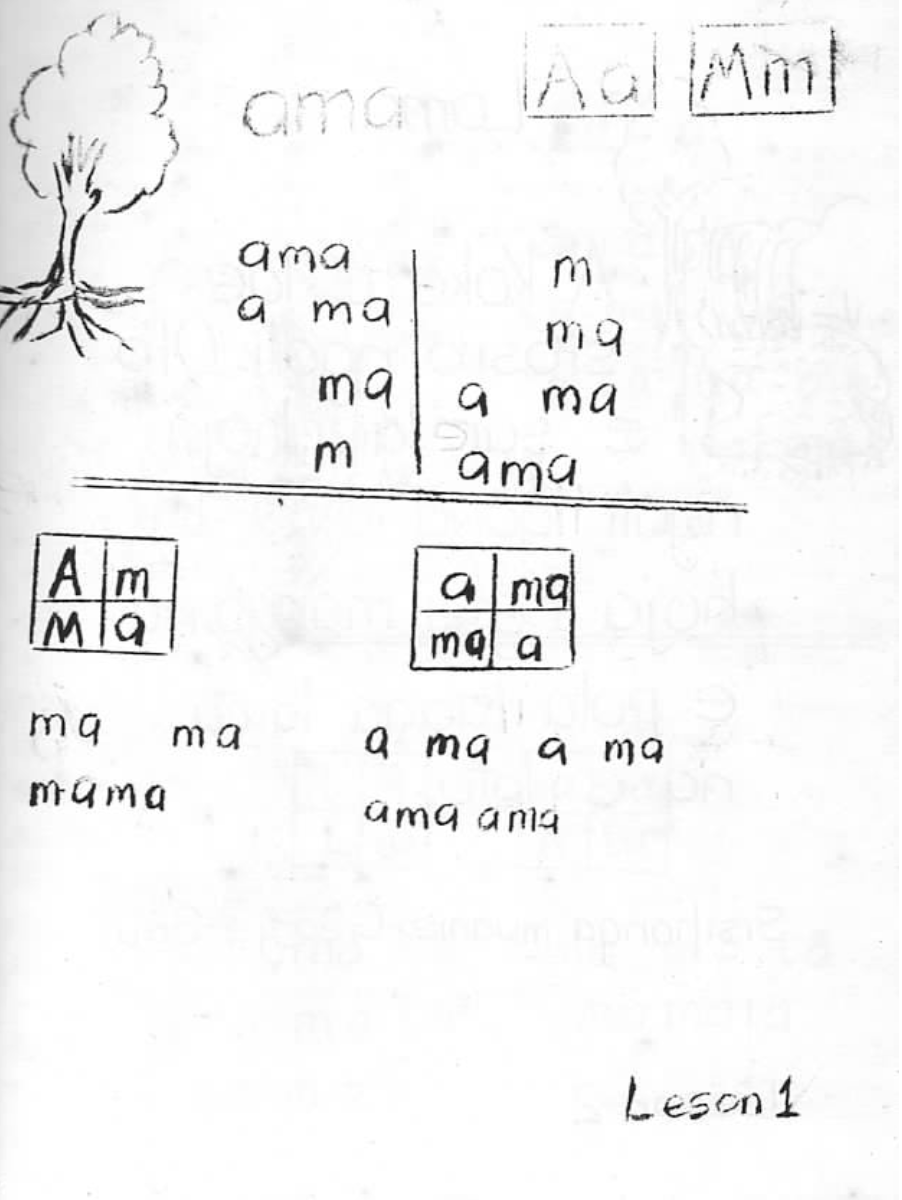
The 2026 Revision

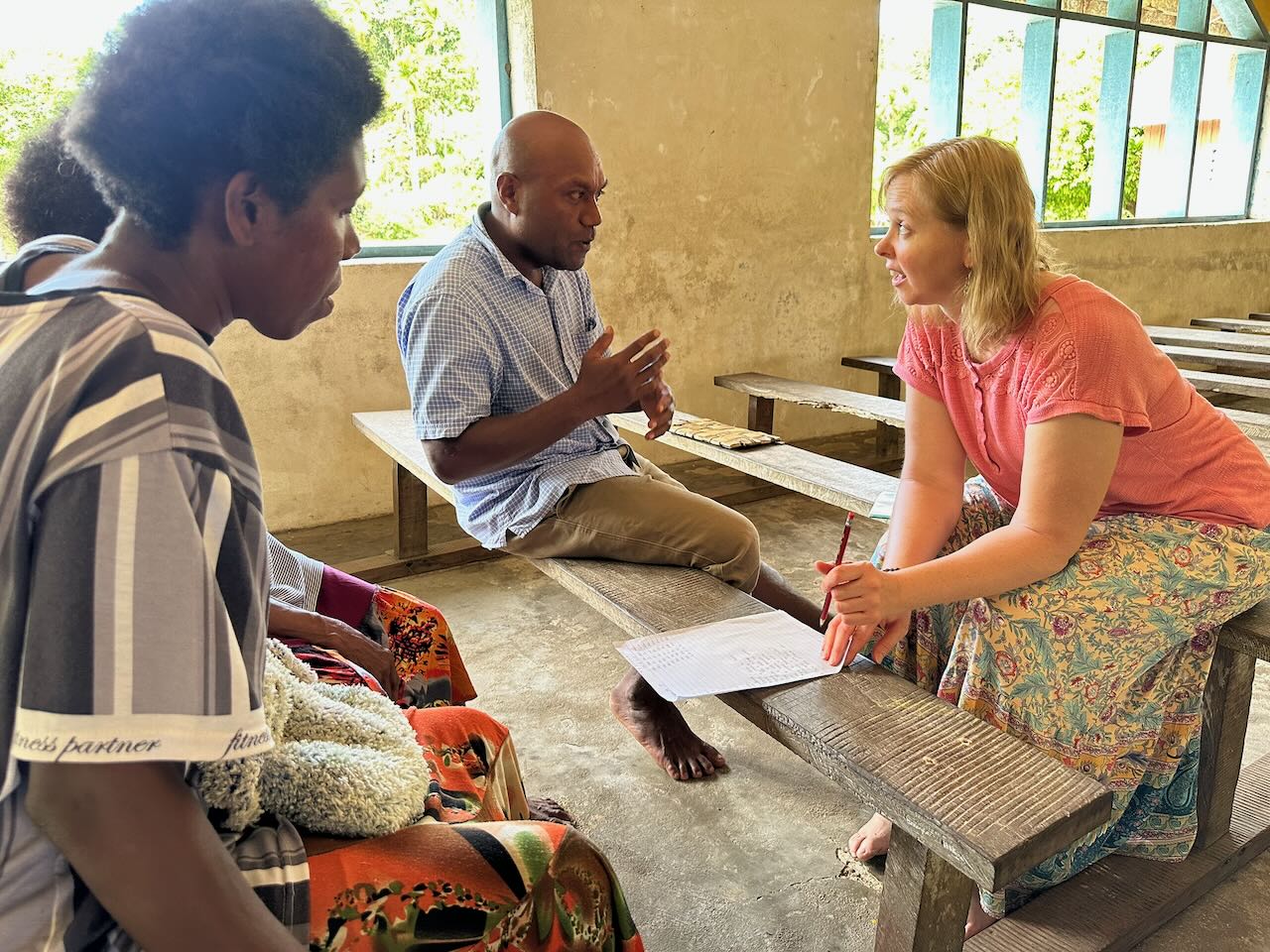
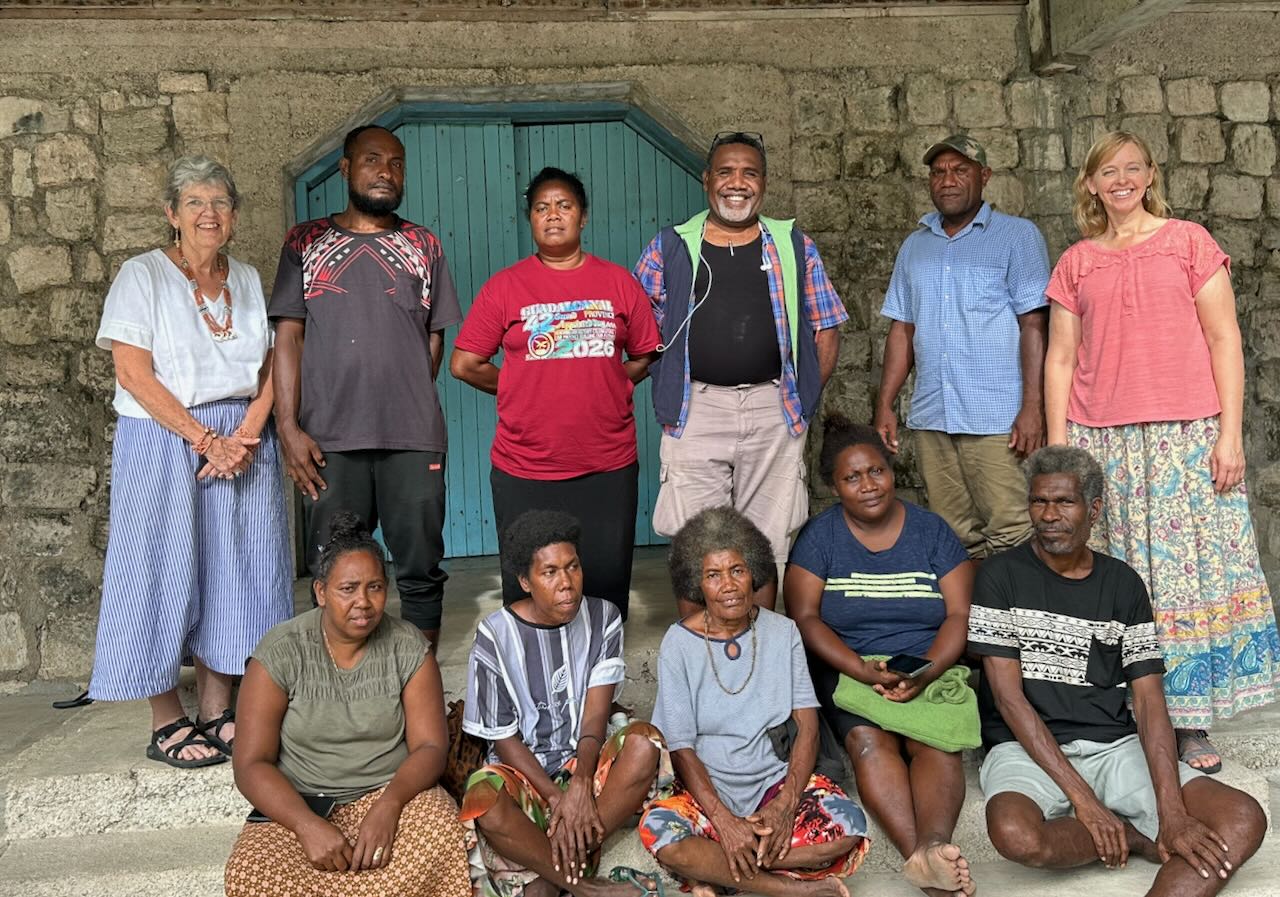
The purpose of this week’s workshop was to review the primer and find more syllables and words that could be added to each lesson. Ten people were invited to come and help with the effort.

To begin with, I had written the first phonics page on the chalkboard. I did a brief demonstration on how a teacher would teach the lesson. Then the participants were asked to help think of any other words that could be made with the letters ‘a’ and ‘m’. They did think of another one, which was great. Then it was on to lesson 2.

After going through a few lessons together, we divided the participants into 3 smaller groups. Each group was assigned one lesson with the task of thinking of other words and also sentences that could be created with the letters had now been taught. After writing down words and sentences for their lesson, we swapped lessons with other groups, and they thought of other words and sentences to that lesson. The papers/lessons were swapped one more time. Sometimes the sentences that could be made with the limited letters turned out to be a bit silly, and that brought some laughter to the process.
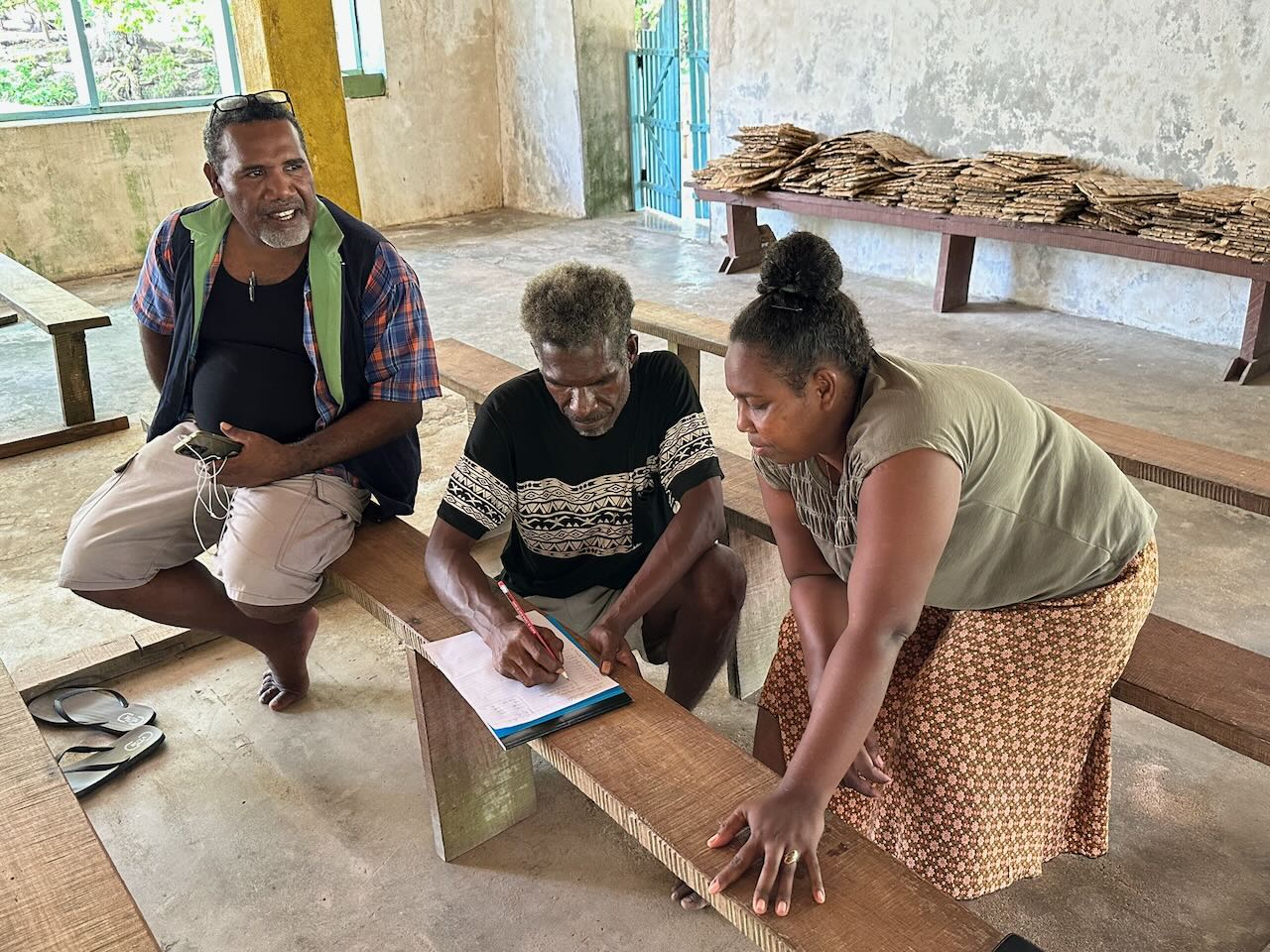
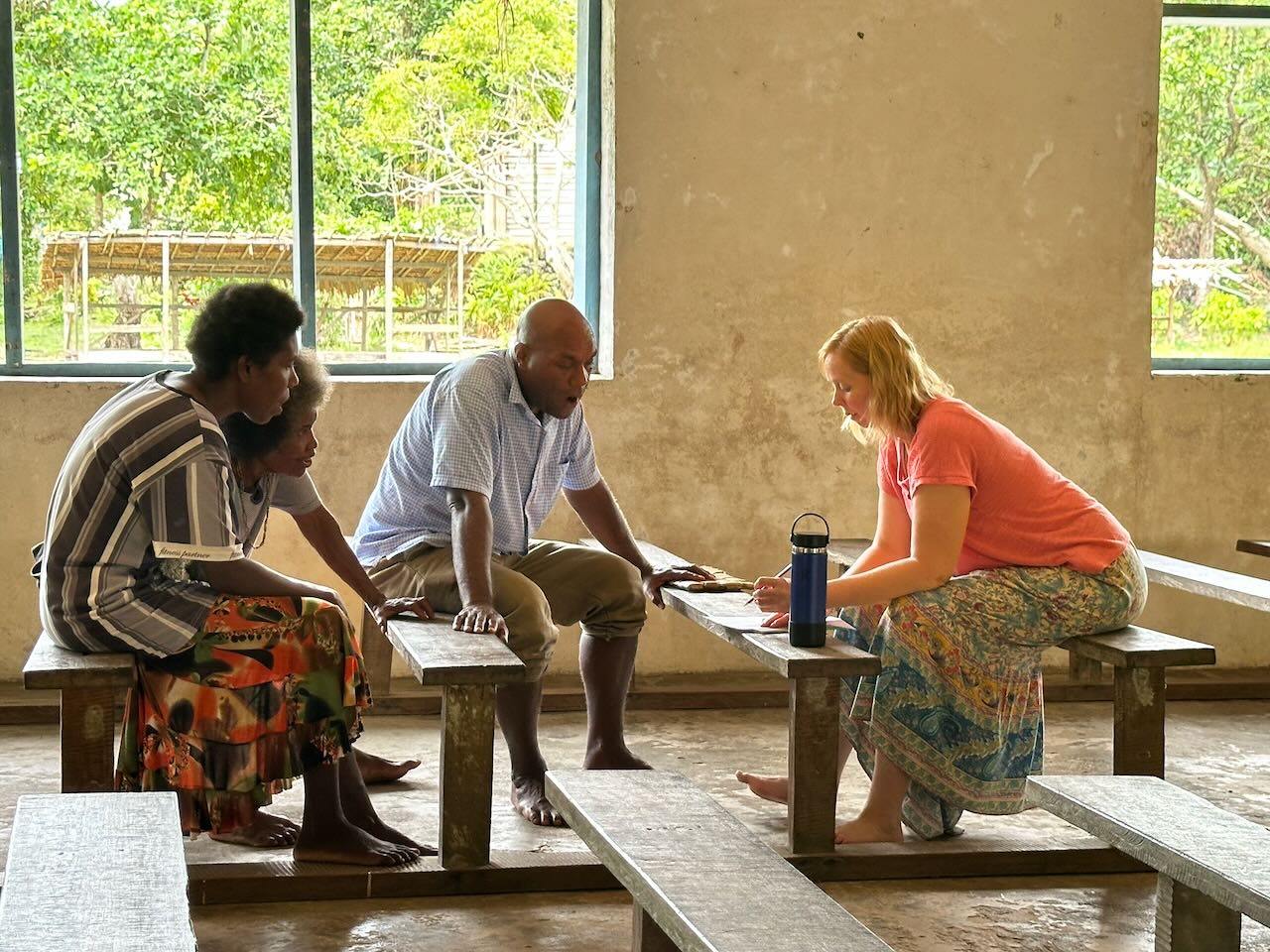
By mid-afternoon, we had covered all the lessons with excellent results. The next step will be to place the words and sentences in the primer pages. It was satisfying to get all the content we needed, and the participants enjoyed being part of the process.
Getting Around the Reef Islands

While we are in the Reef Islands, we are staying on Pigeon Island. This small 5 acre island was ‘purchased’ by a British couple who sailed around the world in the 1950’s before settling down here. A small one bedroom efficiency bungalow is our home for the time here and we enjoy meals prepared by the island-owners in the evenings. 

Experiencing how Reef Islanders move around the islands has been interesting. Many people have traditional wooden canoes carved from wood and others have small fiberglass canoes. These canoes provide transportation between islands and for fishing as well.

Our transportation to and from the workshop venues is provided by a local pastor with a fiberglass boat and an outboard motor. The timing of the tides has to be taken into account for our daily commute. The tides of the day determine when we can travel as low tides provide a real challenge. With the pastor on the outboard at the back of the boat and someone in front carefully watching the water depths, we travel about 20-30 minutes to reach the workshop venues. In some places the outboard engine is pulled up and the boat is pushed through the shallow waters with with long poles until the boat reaches deeper waters again. 

On Thursday afternoon the tides were so low, we had to wade a long way through shallow water in order to reach a point where the waters were deep enough for us to climb inside. After Tim and I were in the boat, the rest of the passengers pulled the boat along to deeper waters before they climbed in and away we went. In some places we can peer over the side into the crystal clear aquamarine waters and spot reef fish and starfish. That never gets old.

Mr. MacGyver Washes Clothes in the Provinces

We are currently in the Reef Islands and staying at a ‘resort’ (think of it as ‘glamping’) where we have a small one room bungalow. Tim has been washing our clothes each night since he is much better at wringing out the clothes than I am.

We travel with a bar of locally manufactured coconut oil laundry soap. Tim rubs some soap on the clothes and ‘agitates’ the clothes in the bucket. After rinsing and wringing them out, we hang them on the clothesline. We travel with a clothesline and a few clothespins.

It’s all a part of traveling out to the provinces. Mrs. MacGyver says Mr. MacGyver is a wonderful blessing!

3 Workshops in a Faraway Place

Temotu Province makes up the easternmost part of the Solomon Islands. Small islands are scattered across the ocean with great distances between the island groups. The Reef Islands are home to speakers of the Äiwoo (ay-woh) language. 

At the request of our colleague, John Rentz, we traveled to the Reef Islands to conduct 3 workshops. To get to there we boarded a twin-engine 48 passenger Dash 8 and flew 2 hours to Lomlom airstrip where John met us. After disembarking, John shared with us the news that due to a dispute between local land owners, our flight might be the last one for some time. After a few days, we decided there are certainly worse places to get stuck!

Last week, Tim led a workshop for priests and clergy to help them become more familiar with reading the Äiwoo language. Due to their education, these 18 participants were familiar with reading in English but had had little experience in reading their own language. Armed with a transition primer, Tim has helped them learn how reading Äiwoo differs from English. For some time, these clergy have been asking John for help in reading so that they can read aloud Äiwoo Scriptures with clarity and fluency. By the end of the workshop and with plenty of practice, they expressed gratitude and excitement about their new ability, and we trust that they will continue to practice and read the translated Scriptures in Äiwoo. This week, Tim is leading a similar workshop for church catechists and lay leaders. 

Meanwhile, Martha was in a different village leading a teacher training workshop to equip 22 attendees from various communities to teach Äiwoo literacy. The training has gone well and the teachers are gaining understanding and confidence. The two week workshop runs all day and Tim comes to help in the afternoon as his workshop is in the mornings. 

You may wonder how we can teach anyone when we don’t speak Äiwoo ourselves. Good question. As we lead the workshops, we use Solomon Islands Pijin, the national trade language. In the literacy workshop, Martha demonstrates how to teach each part of the lesson using a Pijin reading primer that uses the same strategy. Then participants break up into small groups where they practice that same activity from the Äiwoo primer. One person teaches the lesson while the others play the part of the students. Moving around from group to group, Martha can check to see they are remembering to follow each step. (In the afternoons, Tim makes the 20 minute walk from from his workshop venue to help with the teacher training.)

One grade 1 student who has stayed out of school due to a cough has wandered into the workshop to watch and he has become a participant. It’s been quite fun for all of us because as a result of sitting in on the training, Raphael has started to learn to read Äiwoo – providing real proof of the effectiveness of this reading method. 

The first week went really well for both groups and we are almost done with week 2. Participants are excited to start using the training they have received and they have thanked us for coming here. In turn, we feel really blessed to be here and serve these beautiful people who have made us feel so very welcome. 

Welcome Home

One of our amazing raintrees

Our house sits at the bottom of a steep driveway. After opening the gate, we drive into the yard where a sprawling raintree provides an umbrella of shade for the house. Beyond the tree is the valley below which opens to the Mataniko River and the sea. Across Iron Bottom Sound, Savo Island almost seems to float on the horizon. When we come through the gate and see that tree, I relax and feel grateful to be home again.

Over the years, I have collected wild orchid plants. Sometimes I have purchased them in the market or they have been gifted to me in our travels around the country. These delightful low maintenance plants have taken root in the bark of the tree and continued to grow and spread. They aren’t always in flower, but there are several in bloom at the moment. The branch on which most of them sit can be viewed from our bedroom window – an added bonus.